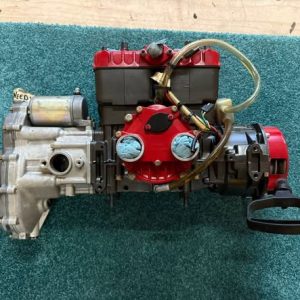
The Rotax 582 “Blue Head” RAVE Engine – Built by Rotax Rick should be selected only after confirming its serial number, builder records, internal configuration, gearbox, operating history, inspection status, and aircraft compatibility.
The Rotax 582 Blue Head can provide strong project potential, while broad Rotax 582 Aircraft Engine terminology should not imply compatibility with every airframe or propeller system.
The Rotax 582 Two-Stroke Engine, Rotax 582 Ultralight Engine, Rotax 582 Aviation Engine, and Rotax 582 65HP Engine phrases represent closely related searches for lightweight aircraft propulsion.
Accurate descriptions help customers compare engine condition, accessories, installation needs, maintenance records, and commercial value.
Whether the project requires an Experimental Aircraft Engine, Ultralight Aircraft Engine, Rotax Aviation Engine, or Light Sport Aircraft Engine, airframe-specific compatibility remains essential.
Identifying the Rotax 582 RAVE Configuration
The engine should be identified through its data plate, serial number, crankcase markings, cylinder configuration, head design, gearbox, ignition equipment, carburetors, and build documentation.
The buyer should determine whether the engine was rebuilt from a complete core, assembled from mixed components, upgraded from another configuration, or built using new and used parts.
Evaluating a Specialist-Built Rotax Engine
The builder’s name alone should not replace a detailed review of internal specifications, clearances, service information, and operating history.
Terms such as rebuilt, overhauled, refreshed, or built should be used only when the available documentation supports their meaning.
Inspecting the RAVE Components
Detailed inspection supports responsible evaluation of the Rotax 582 Blue Head RAVE Engine.
RAVE-system condition should be included in maintenance and pre-purchase records.
Understanding Rotax 582 Two-Stroke Power
Fuel quality, oil selection, mixture preparation, and oil-injection configuration should be confirmed for the exact installation.
Oil lines, pumps, tanks, fittings, filters, and calibration should be inspected when an injection system is installed.
Liquid-Cooled Blue Head Design
Leaks, corrosion, hardened hoses, loose clamps, damaged radiators, and trapped air can reduce system effectiveness.
Coolant hoses should remain flexible, secure, correctly routed, and protected from heat, abrasion, sharp edges, and moving components.
Inspecting Cylinders, Pistons, and Crankcase
Cylinder walls, pistons, rings, bearings, seals, and crankshaft condition should be documented when the engine build allows inspection records.
Professional internal evaluation supports the long-term value of the Two-Cylinder Aircraft Engine.
Dual Carburetor Fuel Delivery
Both carburetors should open and close together while maintaining appropriate cable security and throttle travel.
Fuel filters, pumps, lines, vents, tanks, and shutoff systems also influence dependable fuel delivery.
Maintaining Reliable Combustion
Damaged insulation, corroded connections, unsuitable plugs, weak grounds, or failing components can cause misfiring and poor engine operation.
Replacement ignition parts should match the exact engine configuration.
Reduction Gearbox and Propeller Drive
Different gearbox ratios can influence propeller selection, loading, aircraft performance, and engine operating behavior.
The propeller hub, flange, bolts, adapter, and tracking arrangement should match the gearbox and aircraft installation.
Evaluating Engine Exhaust Compatibility
Expansion-chamber geometry, mounting, joints, springs, supports, seals, silencers, and clearances can influence engine behavior and installation reliability.
Mounting should allow website suitable support without transferring excessive vibration into the engine or aircraft structure.
Lightweight Aircraft Engine Advantages
Accurate weight information supports responsible aircraft planning.
System-level planning protects the value of the Lightweight Aircraft Engine installation.
Rotax 582 Engine Installation Options
The Rotax 582 may be considered for ultralights, experimental aircraft, gyrocopters, trikes, powered parachutes, amphibious projects, and other compatible recreational aircraft.
An Experimental Aircraft Engine installation may require custom mounts, controls, radiator placement, exhaust routing, fuel-system work, instruments, and cowling modifications.
Matching the Engine to a Light Sport Project
The Rotax 582 may power some light sport or sport-aviation aircraft, but this does not make every engine eligible for every aircraft.
Required records should remain complete and accessible to future owners and maintainers.
Documenting Time Since Build
Complete records improve engine valuation and maintenance planning.
Maintenance records should include inspections, carburetor work, ignition service, cooling-system maintenance, gearbox service, hose replacement, seal work, and any engine-removal events.
Understanding Ground-Run Limitations
Detailed run information provides stronger evidence than a general runs-good claim.
The engine should not be operated without a suitable propeller, dynamometer, or approved load arrangement when loading is required.
Pre-Purchase Mechanical Testing
Comprehensive mechanical evaluation supports informed purchasing.
Unknown internal condition should be disclosed clearly.
Buying a Blue Head RAVE Engine
A detailed review reduces unsuitable purchases and unexpected installation expenses.
- Determine whether the radiator, exhaust, carburetors, air filters, starter, gearbox, ignition modules, mounts, instruments, manuals, and build records are included.
- Arrange qualified evaluation whenever internal condition, build scope, operating history, or installation suitability remains uncertain.
- Require shipping support that protects the crankcase, heads, gearbox, carburetors, ignition, fittings, shafts, wiring, exhaust connections, and identification plate from impact, moisture, and movement.
Rotax Engine Packaging Requirements
The engine should be secured to a suitable shipping base or crate that supports its weight without loading delicate carburetors, fittings, wiring, cooling connections, or exhaust components.
The crankshaft and gearbox should not carry unsuitable shipping or storage loads.
Mounting the Blue Head RAVE Powerplant
Professional preparation protects both the engine and aircraft.
Fuel lines should remain suitable, supported, filtered, protected, and free from sharp bends or heat damage.
Required aircraft records and operating limitations should be updated appropriately.
Maintaining the Rotax 582 Blue Head Engine
Long-term maintenance includes inspection of spark plugs, carburetors, fuel lines, filters, cooling hoses, coolant, ignition parts, RAVE components, exhaust supports, gearbox, mounts, wiring, and leaks.
Maintenance should remain documented with dates, hours, parts, findings, and personnel involved.
Commercial Value of the Rotax 582 RAVE Engine
Honest product information strengthens buyer confidence and reduces disputes.
Buyers should compare complete engine packages rather than bare powerplants alone.
Buying a Specialist-Built RAVE Engine
For a properly matched aircraft installation, the engine can provide compact aviation power when professionally inspected, installed, operated, and maintained.
Buyers should request current photographs, detailed build records, transparent condition information, protected freight arrangements, secure transaction terms, and qualified Rotax-engine review.
Whether the product is described as a Liquid-Cooled Aircraft Engine, Two-Cylinder Aircraft Engine, Lightweight Aircraft Engine, or Experimental Aircraft Engine, complete system compatibility remains essential.
With complete evaluation and continued care, the Rotax 582 “Blue Head” RAVE Engine – Built by Rotax Rick can deliver a professional combination of lightweight construction, liquid-cooled design, two-stroke power, and recreational aviation versatility.